

 See My Latest Article on HelloNation
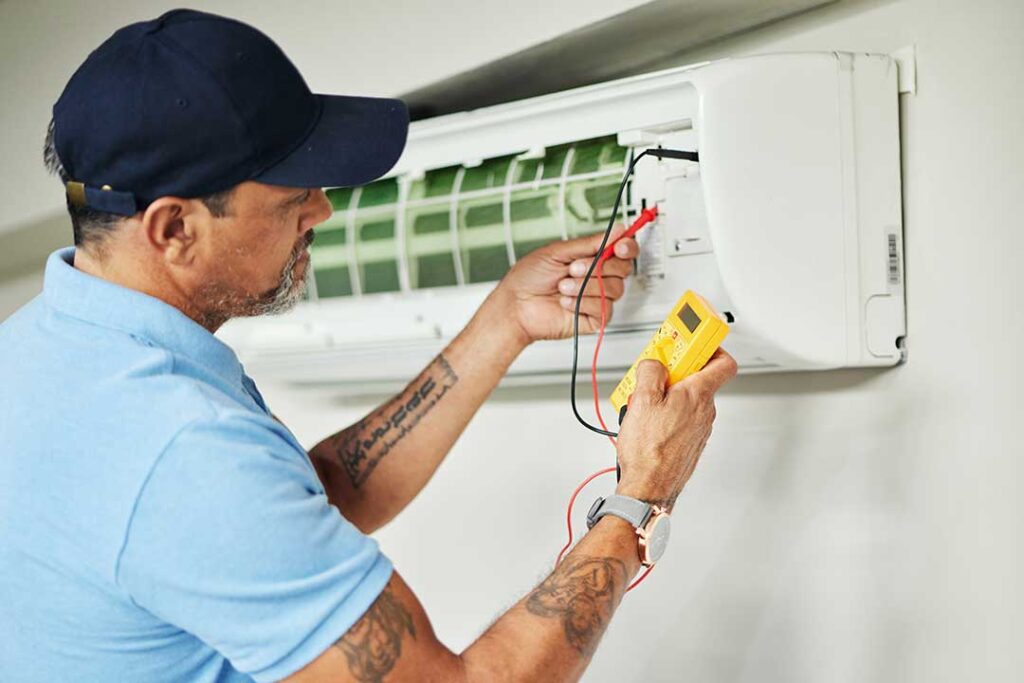
An air conditioner usually freezes because the indoor evaporator coil becomes too cold. The most common underlying problems are restricted airflow, low refrigerant, or a mechanical or control issue that prevents the system from operating normally.
Although ice may appear to be the main problem, it is usually a symptom. Continuing to run the system while the coil is frozen can reduce cooling, increase operating costs, and place unnecessary strain on the compressor.
What does it mean when an air conditioner freezes?
An air conditioner is designed to remove heat from indoor air as that air passes over the evaporator coil. Under normal conditions, moisture may condense on the coil and drain away. If the coil temperature falls below freezing, that moisture turns to frost and ice.
The ice can spread across the coil, the nearby refrigerant tubing, and sometimes the entire indoor unit. As the ice thickens, it blocks airflow even further, creating a cycle in which less warm air reaches the coil and more ice forms.
Common signs include:
- Weak airflow from supply vents
- Air that is not as cool as usual
- Ice on the indoor copper refrigerant line
- Water around the indoor unit after the ice melts
- Longer cooling cycles
- A system that runs continuously but cannot reach the thermostat setting
Can a dirty air filter cause the system to freeze?
Yes. A dirty filter is one of the simplest and most common causes of restricted airflow. When the filter is heavily loaded with dust, pet hair, or construction debris, less warm air moves across the evaporator coil. The coil may then become cold enough to freeze.
Filter problems can develop faster in homes with pets, indoor projects, frequent door opening, or nearby outdoor dust. Newer homes with tighter construction may also show symptoms quickly if the filter is overdue for replacement because the system depends on steady air circulation.
The correct filter change interval depends on the filter type, system design, household conditions, and manufacturer instructions. A filter should not be replaced with a denser model solely because it appears more effective. A filter that is too restrictive for the equipment can reduce airflow even when it is clean.
What other airflow problems can freeze an air conditioner?
A clean filter does not guarantee adequate airflow. Other restrictions may include blocked return grilles, closed supply registers, crushed or disconnected ductwork, a dirty evaporator coil, or a blower fan that is not moving enough air.
Return grilles are especially important because they provide the air path back to the indoor equipment. Furniture, curtains, storage items, or pet beds can partially block them. Closing multiple supply vents can also disturb the system’s designed airflow, particularly in homes with long duct runs or zoning controls.
A dirty indoor coil is another overlooked cause. Dust and household debris can build up on the coil over time, reducing the amount of air that passes through its fins. Because the coil is often inside the air handler or furnace cabinet, the buildup may not be visible during a routine filter check.
Can low refrigerant make the coil freeze?
Yes. Low refrigerant can cause the evaporator coil to operate at an abnormally low temperature. Moisture on the coil may freeze instead of draining away.
Low refrigerant is generally caused by a leak or by an incorrect charge after installation or previous service. Refrigerant does not normally get “used up” like fuel. If the level is low, there may be an underlying problem that needs to be identified.
A system with low refrigerant may show several symptoms at once:
- Ice on the indoor coil or refrigerant line
- Reduced cooling capacity
- Longer run times
- Hissing or bubbling sounds near a leak
- Higher indoor humidity
- Different temperatures across sections of the coil
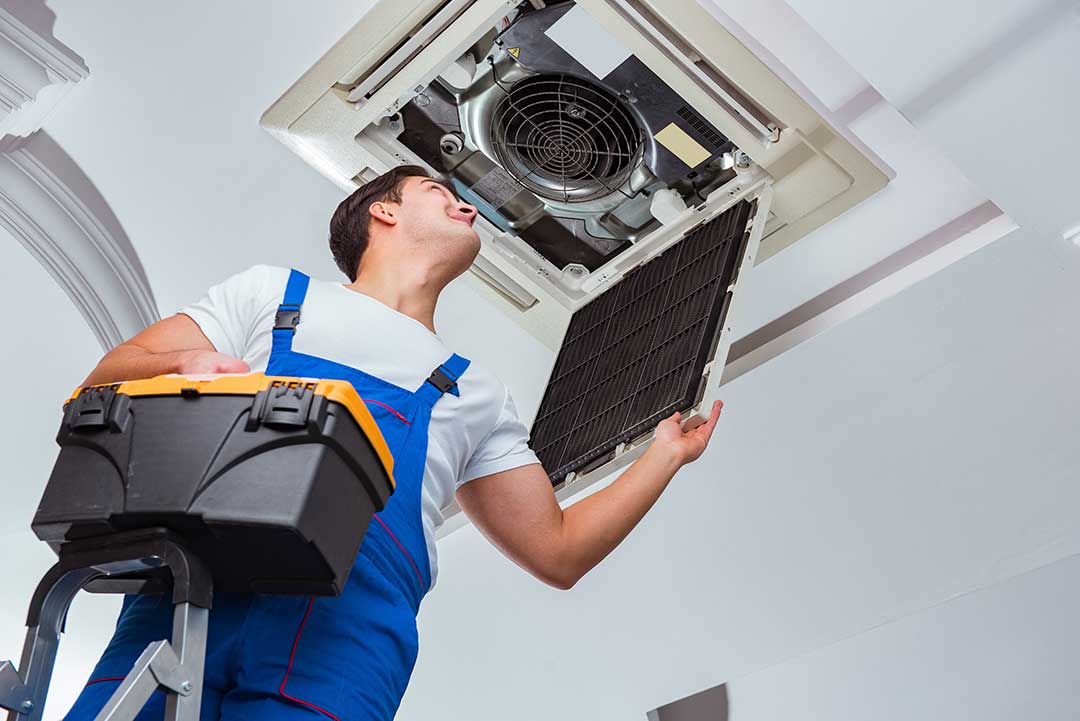
Adding refrigerant without checking for the cause may provide only temporary improvement. Refrigerant handling also requires specialized equipment and must follow applicable environmental and safety requirements.
Can a thermostat or blower problem be responsible?
Yes. A malfunctioning blower motor, weak capacitor, damaged control board, or faulty thermostat can interrupt normal airflow or cause the compressor to run without the indoor fan operating correctly.
A thermostat issue may also cause unusually long cooling cycles. If the thermostat is in a poor location, exposed to sunlight, near a supply vent, or affected by another heat source, it may not measure representative room conditions.
Some systems have separate indoor and outdoor controls. If the outdoor equipment continues operating while the indoor blower stops, the coil can freeze quickly. This situation is more serious than a simple filter problem because the system may be running in an unsafe or damaging condition.
Does hot, humid weather make freezing more likely?
Hot, humid weather does not directly cause a properly operating air conditioner to freeze, but it can reveal an existing weakness. During summer in Chapin, SC, air conditioners often run for long periods while removing both heat and moisture from indoor air. A marginal airflow problem, aging blower, dirty coil, or refrigerant issue may become noticeable during these heavier operating periods.
Humidity also explains why a frozen coil can produce a large amount of water after shutdown. As the ice melts, the drain pan and condensate line may need to handle more water than they normally receive. If the drain is partially blocked, overflow can damage ceilings, flooring, insulation, or nearby equipment.
What should be done when ice is visible?
Turn the cooling system off and allow the ice to melt completely. If the thermostat has a fan-only setting, the indoor fan may be used to help circulate room-temperature air, provided the fan is operating normally.
Do not chip ice away with a tool. Sharp objects can damage the coil, refrigerant tubing, wiring, or surrounding components. Do not use an open flame or high-heat device to speed the process.
After the ice has melted, check the filter, confirm that return and supply grilles are unobstructed, and look for standing water around the indoor equipment. Avoid restarting cooling repeatedly if the system freezes again. Recurring ice indicates that the original cause remains unresolved.
Why does an air conditioner keep freezing after it thaws?
Repeated freezing usually means the problem is not limited to temporary ice. Possible causes include a continuing refrigerant leak, inadequate airflow, a dirty evaporator coil, a failing blower component, a restricted duct, or a control problem.
A qualified HVAC technician is needed when refrigerant, electrical components, sealed-system pressures, motor controls, or internal coil conditions must be tested. Electrical panels and refrigerant circuits can present serious hazards, and incorrect adjustments may damage the equipment or create unsafe operating conditions.
For area households, practical prevention starts with keeping return grilles clear, using the correct filter, watching for declining airflow, and paying attention to unusual water near the indoor unit. A frozen coil is easier to address before melting water and repeated compressor operation create additional damage.