

 See My Latest Article on HelloNation

A dirty air filter can restrict airflow, reduce comfort, increase energy use, and place extra strain on heating and cooling equipment. For households in Chapin, SC, where air conditioners often run for long stretches during warm, humid weather, filter condition is a small maintenance detail with system-wide effects.
What does an air filter actually do?
An HVAC filter captures airborne particles before air moves through the indoor equipment and returns to living spaces. Depending on the filter and the home, it may collect dust, lint, pollen, pet hair, and some larger airborne debris.
The filter is not designed to make indoor air completely particle-free. Its primary job is to protect the system’s indoor coil, blower, and ductwork from accumulating debris. A filter that is heavily loaded with dust can no longer allow air to pass through as easily.
That restriction creates a problem because HVAC equipment is designed around a specific amount of airflow. The system must move enough air across the indoor coil during cooling and through the heat exchanger or electric heating components during heating.
How does a dirty filter reduce airflow?
A clogged filter increases resistance in the return-air path. The blower still attempts to move air, but less air may pass through the system during each operating cycle.
Reduced airflow can cause several noticeable effects:
- Rooms may take longer to reach the thermostat setting.
- Air from the supply registers may feel weaker than usual.
- Some rooms may become warmer or cooler than others.
- The system may run for longer periods.
- The return grille may make unusual whistling or rushing sounds.
- The filter may appear visibly gray, bent, or coated with dust.
A filter does not have to look completely blocked to affect performance. Fine particles can build up throughout the filter material, creating resistance before the surface looks dramatically dirty.
Can a dirty filter make an air conditioner freeze?
Yes. A severely restricted filter can contribute to a frozen indoor coil during cooling operation.
The indoor coil needs sufficient warm return air moving across it. If airflow becomes too low, the coil can become colder than intended. Moisture in the air may then freeze on the coil instead of draining away normally. Ice may spread across the coil and eventually affect the refrigerant lines or surrounding components.
Signs may include:
- Ice on the copper refrigerant line or indoor coil area
- Water around the indoor equipment after the ice melts
- Little air coming from supply registers
- A system that runs continuously but does not cool effectively
Turning the cooling system off allows the ice to thaw, but repeated freezing indicates an underlying airflow or equipment problem. Replacing a dirty filter is a reasonable first step, but the system should not be operated while substantial ice remains.
Does a dirty filter increase energy use?
Usually, yes. When airflow is restricted, the system may need to run longer to reach the thermostat setting. Longer cycles can increase electricity use, especially during extended cooling periods.
The effect varies according to the system’s design, the filter condition, the home’s insulation, ductwork, thermostat setting, and outdoor weather. A slightly dusty filter may have a limited effect, while a heavily blocked filter can create a significant airflow problem.
In the humid climate common to this area, longer cooling cycles can also affect moisture control. Air conditioning removes humidity as it cools indoor air. If the system cannot move air properly or operates under abnormal conditions, indoor comfort may suffer even when the thermostat temperature appears acceptable.
What damage can a dirty filter cause?
A filter that remains restricted for a long time can contribute to wear on several parts of the system.
The blower motor may work harder to overcome the added resistance. That can increase heat and mechanical stress. In some systems, poor airflow may also cause safety controls to shut the equipment down or cause repeated cycling.
During heating operation, restricted airflow can make the furnace or heat pump operate outside its intended conditions. A furnace may overheat and shut off through a safety limit control. A heat pump may struggle to distribute heat evenly, particularly during colder weather.
A dirty filter can also allow dust to collect on the indoor coil, blower wheel, or other internal surfaces if air bypasses the filter or the filter is poorly fitted. Once these components become coated, replacing the filter may not fully restore airflow.
How often should an HVAC filter be replaced?
There is no single replacement interval that fits every home. A common starting point is checking the filter monthly and replacing or cleaning it according to its condition and the manufacturer’s instructions.
Filters may load faster in homes with:
- Several pets
- Recent construction or remodeling
- Frequent fireplace or wood-burning activity
- Open windows during high-pollen periods
- Multiple occupants
- Residents with allergies or respiratory sensitivities
- A return grille located near dusty areas
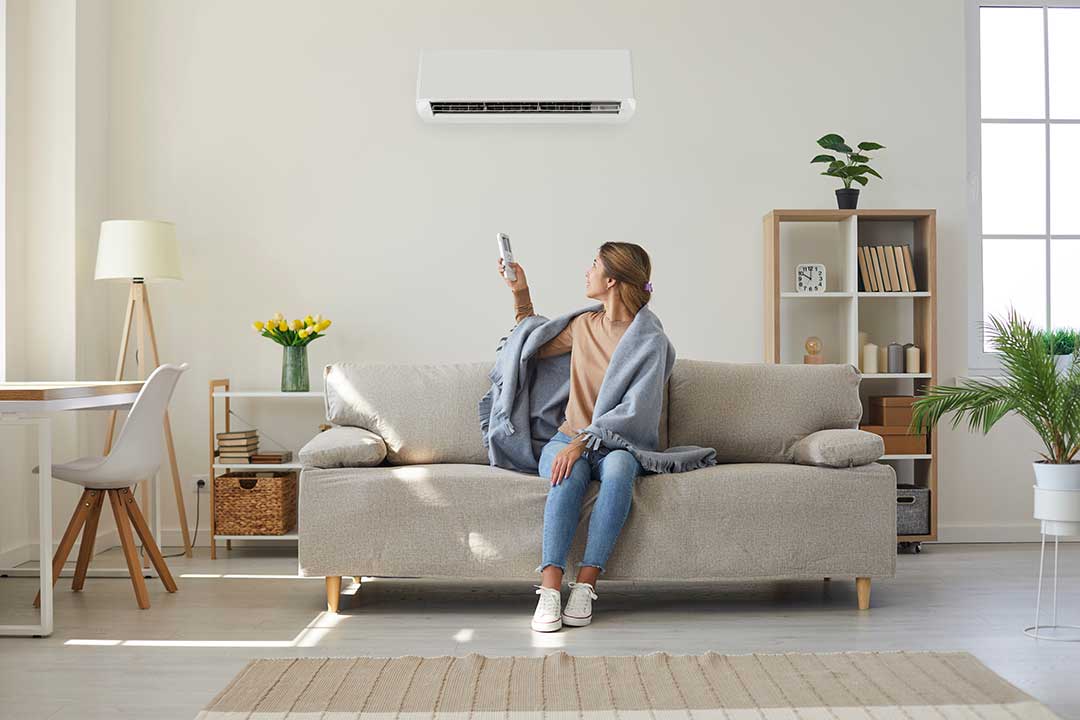
Some filters are designed for one-time replacement, while others are washable. A disposable filter should not be washed unless its instructions specifically allow it. A washable filter must be fully dry before it is reinstalled.
The correct size matters as much as the replacement schedule. A filter that is too small, too large, warped, or installed in the wrong direction may allow unfiltered air around its edges. Most filters have an airflow arrow showing which direction the filter should face.
Can a higher-rated filter improve indoor air quality?
A higher-efficiency filter may capture more small particles, but stronger filtration is not automatically better for every HVAC system.
Filters with greater resistance can reduce airflow if the equipment or filter cabinet was not designed to handle them. This is especially important in older systems, homes with undersized return ducts, or systems already showing weak airflow.
The practical goal is a filter that provides appropriate particle capture without creating excessive resistance. The manufacturer’s recommendations and the system’s filter specifications are more useful than choosing a rating based only on the highest number available.
Why do some rooms still have comfort problems after a filter change?
Replacing the filter can correct one airflow restriction, but it cannot solve every comfort issue. Uneven temperatures may also result from duct leakage, closed dampers, inadequate return-air pathways, insulation gaps, sun exposure, or equipment sizing.
A home may also have more than one filter. Some systems use a central filter near the main return grille, while others have filters at individual return grilles. Missing one can leave part of the system restricted or allow dust to enter through an unfiltered return.
After installing a clean filter, allow the system to operate normally and observe whether airflow, noise, and temperature balance improve. If weak airflow, ice, repeated shutdowns, burning odors, or unusual electrical sounds continue, the condition may involve more than the filter and can require qualified service for safe diagnosis.
What is the simplest filter-care routine?
A practical routine is:
- Locate every filter serving the HVAC system.
- Check each filter about once a month.
- Confirm the size and airflow direction before installing a replacement.
- Keep return grilles clear of furniture, curtains, and stored items.
- Record the replacement date on the filter frame or a household calendar.
- Inspect more often during dusty projects, heavy pollen, or extended heating and cooling periods.
For area households, this routine is particularly useful before the first sustained summer cooling period and again before winter heating becomes regular. A clean, correctly fitted filter supports proper airflow, but it does not replace periodic attention to the rest of the HVAC system.