

 See My Latest Article on HelloNation
Insulation does more than keep a home warm in winter. It slows unwanted heat movement, helps conditioned air remain where it belongs, and reduces the amount of time an HVAC system must run to maintain a comfortable indoor temperature.
For homes in Chapin, SC, this matters especially during long, hot, humid summers. Air conditioning must remove both heat and moisture, so weaknesses in the building envelope can increase energy use and make rooms feel damp or unevenly cooled.
How does insulation improve HVAC efficiency?
Insulation reduces the rate at which heat passes through ceilings, walls, floors, and ducts. During summer, it helps block outdoor heat from entering the home. During winter, it slows indoor heat from escaping.
That means the HVAC system has less work to do. A well-insulated home can often maintain its thermostat setting with shorter or less frequent operating cycles than a home with gaps, compressed insulation, or poorly protected ductwork.
Insulation does not create cooling or heating by itself. Instead, it helps preserve the comfort produced by the HVAC system.
Why does attic insulation matter so much?
The attic is one of the most influential areas in a home’s energy performance because heat naturally rises and roof surfaces can become extremely hot. Without adequate insulation, heat can pass through the ceiling and warm the rooms below.
A properly insulated attic can:
- Reduce heat entering living spaces
- Help upper-floor rooms stay more comfortable
- Lower the cooling load during summer
- Reduce winter heat loss through the ceiling
- Make thermostat readings more representative of actual room conditions
The insulation must be installed evenly and at the correct depth. Thin areas, compressed sections, and gaps around recessed lights, plumbing penetrations, attic hatches, and electrical fixtures can reduce overall performance.
Air sealing should generally be addressed before adding more insulation. Insulation slows heat transfer, but it does not reliably stop air movement through cracks and openings. Warm, humid outdoor air can enter through the ceiling plane if those pathways remain open.
What is the difference between insulation and air sealing?
Insulation and air sealing solve related but different problems.
Insulation slows heat conduction through a surface. Air sealing limits the movement of air through holes, cracks, joints, and penetrations.
A home may have a large amount of insulation and still perform poorly if air can move around it. Common leakage locations include:
- Attic access panels
- Plumbing and wiring penetrations
- Gaps around chimneys or flues
- Recessed light fixtures
- Door and window frames
- Duct connections
- Crawl space entry points
In a humid climate, air sealing also helps limit the entry of moisture-laden outdoor air. That can make it easier for the air conditioner to control indoor humidity.
Air sealing around fuel-burning equipment requires caution. If an attic or utility area contains a furnace, water heater, or other combustion appliance, changes to airflow can affect safe operation. Combustion safety should be evaluated when significant air-sealing work is planned in those areas.
How does duct insulation affect HVAC performance?
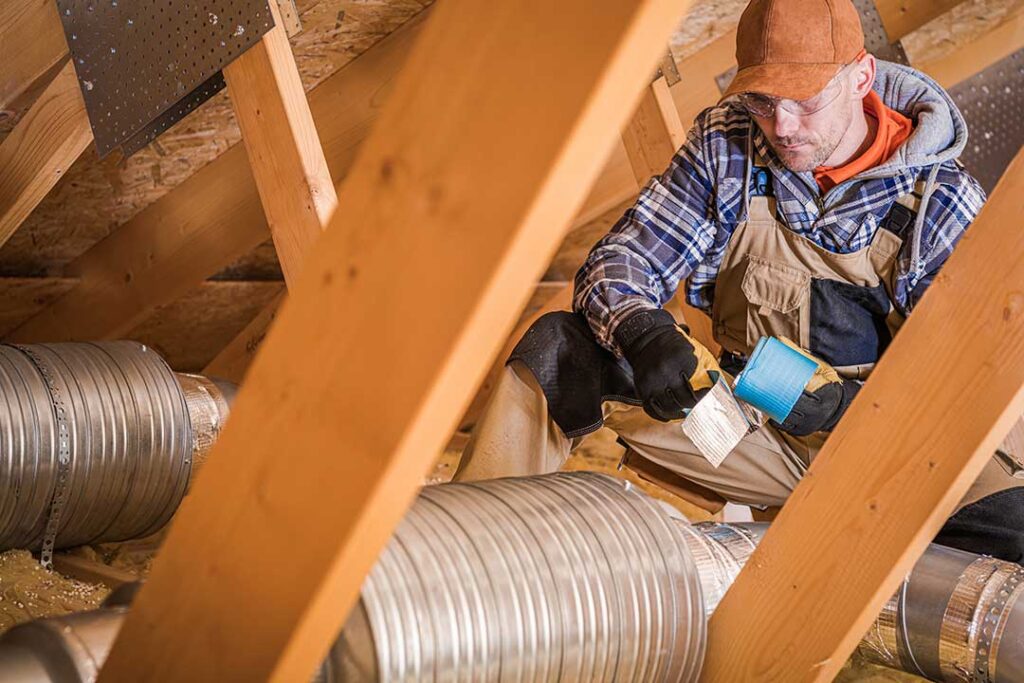
Ducts carry heated and cooled air throughout the house. If they pass through a hot attic, crawl space, garage, or other unconditioned area, they can gain or lose heat before the air reaches the rooms.
Duct insulation helps keep supply air closer to the temperature produced by the HVAC equipment. It is most effective when combined with properly sealed duct joints.
Unsealed ducts can lose conditioned air through gaps, while uninsulated ducts can transfer heat through their surfaces. Both problems may cause longer run times and uneven temperatures.
Signs of duct or insulation problems may include:
- One room stays warmer or cooler than nearby rooms
- The system runs for long periods without reaching the thermostat setting
- Supply vents have weak airflow
- Ducts are visibly crushed, disconnected, or poorly supported
- Condensation appears on or around cold duct surfaces
- The attic or crawl space feels unusually connected to the indoor air
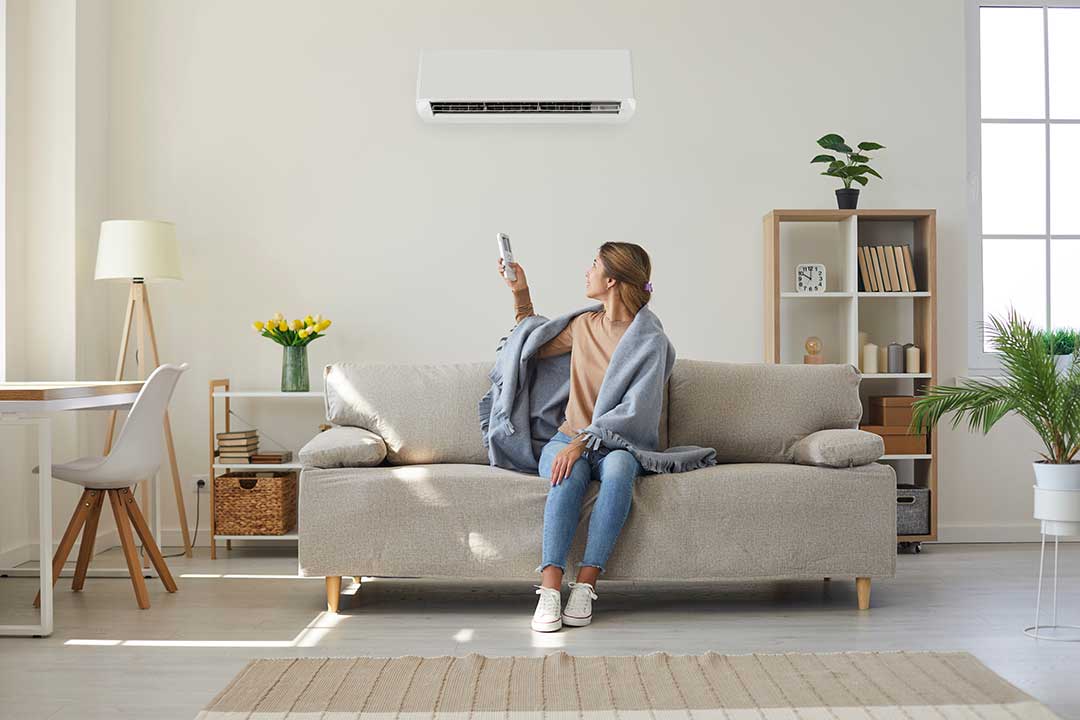
Ducts located inside the conditioned part of the home are generally exposed to less extreme temperature difference. When ducts must remain in an attic or crawl space, sealing and insulation become more important.
Can insulation help with humidity?
Yes, but insulation is only one part of humidity control. In summer, an air conditioner must remove moisture as it cools the air. If warm outdoor air enters through leaks or if the building envelope allows excessive heat gain, the system may run inefficiently and comfort may suffer.
Better insulation and air sealing can help by reducing the amount of heat and humid air entering the home. This may allow the HVAC system to spend more of its operating time maintaining temperature and removing moisture rather than constantly responding to new heat entering from outside.
However, insulation will not correct every humidity problem. Oversized air-conditioning equipment, poor ventilation, plumbing leaks, crawl space moisture, and inadequate drainage can also contribute to elevated indoor humidity.
What insulation problems are common in existing homes?
Older homes and remodeled homes may have insulation that is uneven, settled, damaged, or missing in areas that are difficult to see. Even newer construction can have performance issues if installation was rushed or penetrations were left unsealed.
Common concerns include:
- Insulation compressed by storage boards or foot traffic
- Missing insulation near attic eaves
- Gaps around attic ductwork
- Wet or mold-damaged insulation
- Insulation blocked by recessed fixtures or mechanical equipment
- Inadequate insulation around attic hatches
- Crawl space insulation that has fallen or become detached
- Wall insulation interrupted by additions, repairs, or remodeling
Wet insulation generally performs poorly and may indicate a roof leak, plumbing problem, condensation issue, or drainage concern. The source of the moisture should be corrected before insulation is replaced.
Does more insulation always mean better efficiency?
No. Insulation performance depends on the material, its installed thickness, its condition, and the quality of the installation.
Adding insulation over major air leaks may hide problems without solving them. Blocking soffit or roof ventilation can also create moisture and durability concerns in an attic designed to be vented.
The right approach depends on the home’s construction. Attic insulation, roof-deck insulation, wall insulation, crawl space insulation, and duct insulation each affect different parts of the building system. The goal is a continuous thermal and air boundary, not simply the greatest possible amount of insulation in one location.
How can residents identify whether insulation is affecting comfort?
Look for patterns rather than relying on a single hot or cold day. Useful clues include rooms that are consistently uncomfortable, large temperature differences between floors, high attic temperatures, drafts near ceiling openings, or HVAC run times that seem excessive for mild weather.
A visual attic inspection can reveal obvious gaps, but it cannot always identify hidden air leakage or poorly insulated walls. Infrared scanning, airflow testing, and duct leakage testing can provide more detailed information when comfort problems are difficult to explain.
For many homes, the most effective improvements are not connected to replacing the HVAC equipment. Correcting air leaks, improving attic insulation, and sealing exposed ductwork can help the existing system deliver more of the heating and cooling it already produces.